Parents searching for baby swim lessons in Gilbert and Mesa, AZ often come across two very different approaches: ISR (Infant Swimming Resource) and traditional parent-tot swim lessons. Both aim to build skills in the water, but the methods, structure, and philosophy behind each one look quite different in practice.
Choosing the right fit depends on your baby's age, your family's goals, and what you want those early water experiences to feel like. Here is a clear look at both approaches.
ISR is a specialized program that teaches young children self-rescue skills in the water. Developed in the 1960s, it focuses on a specific emergency response rather than general swim instruction.
Traditional parent-tot programs take a different approach, keeping a caregiver in the water with the child throughout every session. The emphasis is on comfort, bonding, and gradual skill-building.
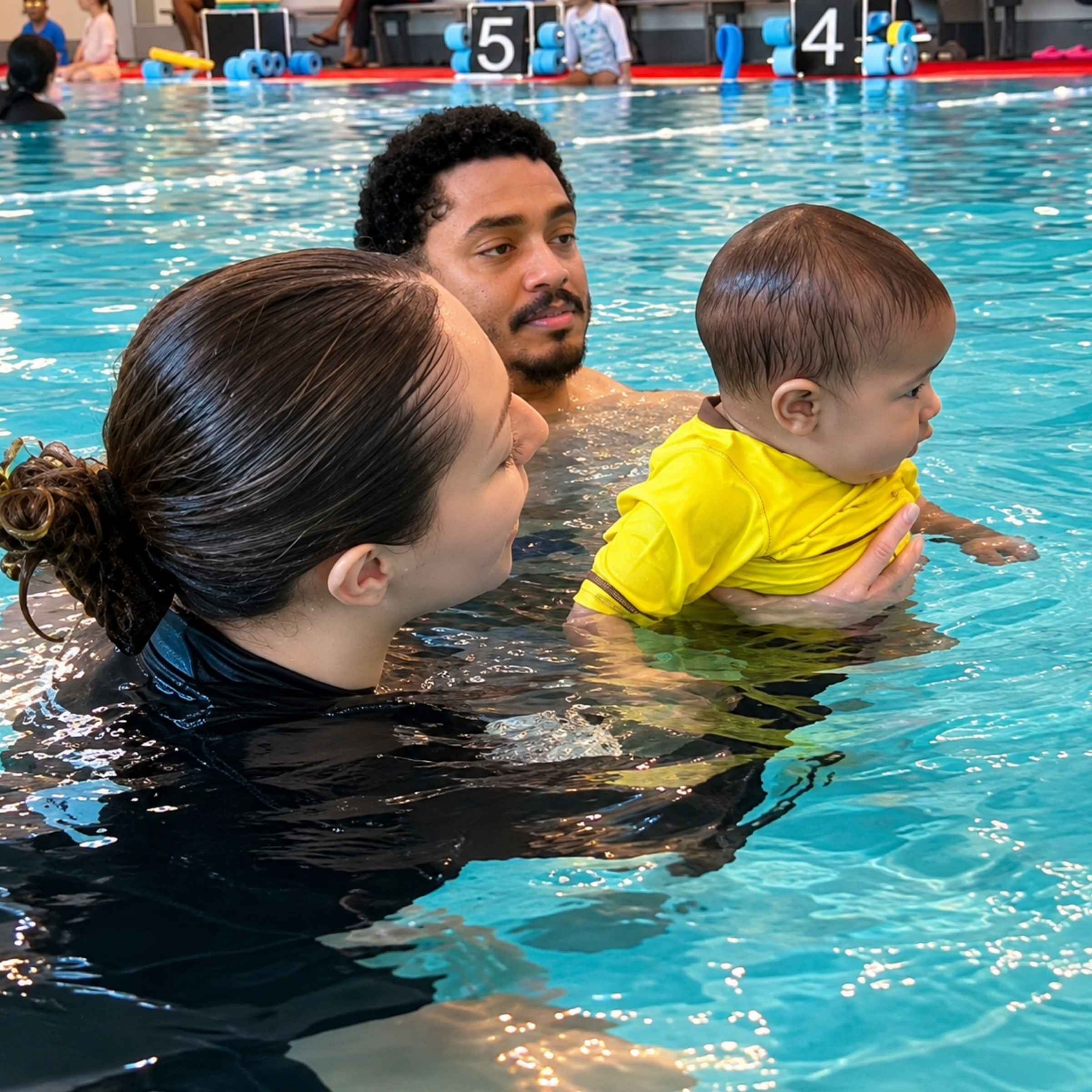
At EVO Swim School in Gilbert and Mesa, AZ, parent-tot instruction starts with the Starfish class for babies as young as 3 months. A caregiver joins the baby in a warm, indoor, climate-controlled pool for every 30-minute session. Activities include supported floating, gentle submersion, breath control basics, and songs that build routine.
As toddlers grow, the Pufferfish class (ages 16 to 24 months) introduces more independent movement, unassisted floating, and early water safety foundations. Both levels run weekly within EVO's ongoing enrollment model, so families attend consistently without a set end date. You can read more about how parent-tot classes build water confidence in our parent-tot guide.
Having a parent in the pool serves two purposes:
Here is a side-by-side comparison of the two methods.
| Factor | ISR (Self-Rescue Method) | EVO's Traditional Parent-Tot |
| Format | Solo lessons, no parent in water | Parent or caregiver in the water with baby |
| Session frequency | Typically daily, short sessions | Weekly sessions |
| Primary goal | Independent self-rescue and float | Comfort, bonding, and gradual skill-building |
| Starting age | Typically 6 months and up | As early as 3 months |
| EVO pricing | Not an EVO program | Free (6 months and under) to $114/month |
Neither method is universally "better." The right choice depends on your family's priorities, your child's temperament, and the kind of water exposure your household has.
ISR may appeal to families who want an emergency-response skill set built quickly.
Traditional programs like EVO's also connect into a curriculum ladder: parent-tot classes lead into entry-level lessons (Otter and Seal starting at age 2), then intermediate and advanced levels.
EVO's parent-tot levels are built for distinct developmental stages. Both take place in warm, indoor pools at the Gilbert (2161 E. Pecos Rd.) and Mesa (3727 S. Power Rd.) locations, so Arizona heat and monsoons never interfere with your schedule.
Starfish is EVO's introduction to the water for the youngest swimmers. With a caregiver holding the baby throughout, coaches lead gentle activities:
No prior water experience is needed, and enrollment is free for babies 6 months and younger.
Pufferfish builds on the comfort established in Starfish. Toddlers practice
Foundational water safety skills that prepare them for group lessons without a parent in the water. A caregiver stays in the pool for every session while coaches gently stretch each child's independence.
Both ISR and traditional parent-tot lessons give young children meaningful time in the water. The best choice is the one that matches your family's schedule, your baby's temperament, and the goals you have for those early experiences. Whatever path you choose, starting early and staying consistent matter most.
Ready to start your baby's swimming journey in Gilbert or Mesa? Join us today and browse available class times, or call EVO Swim School at 480-404-6191.
ISR stands for Infant Swimming Resource, a specific self-rescue-focused swim method taught by independently certified ISR instructors. It is a different program from EVO's traditional parent-tot classes.
No. EVO's parent-tot program (Starfish and Pufferfish classes) uses a traditional, caregiver-in-the-water approach focused on comfort, bonding, and gradual water-skill building rather than the solo self-rescue method used in ISR.
Both approaches have different goals and structures. ISR focuses on independent self-rescue skills, typically through daily solo sessions, while traditional parent-tot programs like EVO's focus on building comfort and connection with a caregiver in the water on a weekly schedule. The right choice depends on your family's goals and your baby's temperament.
EVO's Starfish class welcomes babies as young as 3 months old, with a caregiver in the water for every session. It is free for babies 6 months and younger.
Yes. Many families use one method first and transition to another as their child grows. EVO's curriculum ladder continues from parent-tot classes into independent entry-level classes (Otter and Seal) starting at age 2.
Or register via phone 480-404-6191