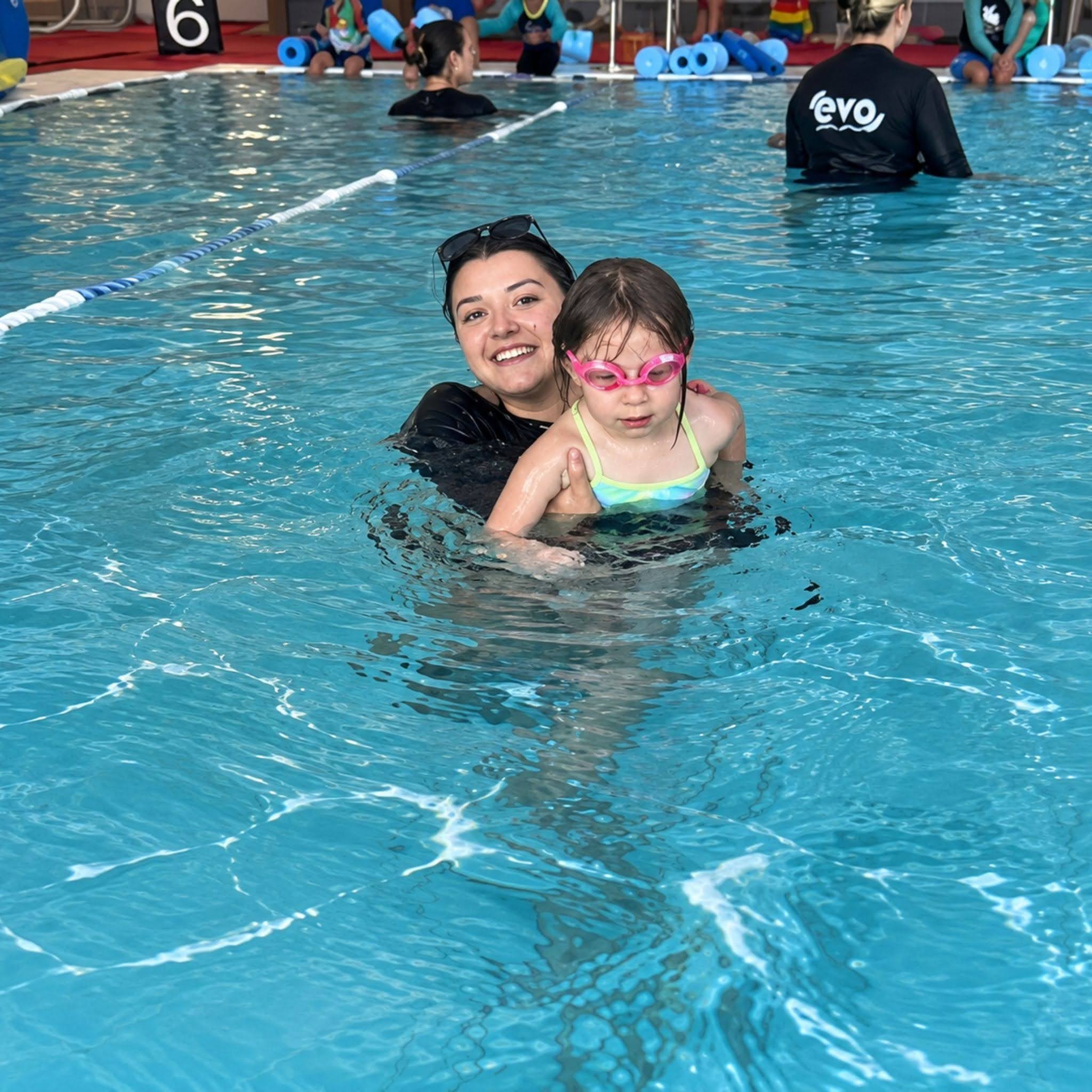
Arizona parents are used to thinking about swim lessons as a warm-weather activity. But when October arrives and mornings drop below 70 degrees, many families with toddlers wonder whether it is safe to keep going. For families in Gilbert and Mesa, toddler swim lesson safety in winter Arizona style comes down to one question: what kind of facility is your child swimming in?
Indoor pool safety for toddlers stays consistent at climate-controlled facilities regardless of the season. Here is what parents should know about keeping swim lessons going through the cooler months.
Parents are right to think carefully about cold exposure for young children. The concern is valid, and understanding why indoor facilities change the equation can help families at EVO Swim School in Gilbert and Mesa make a confident decision about swim lessons toddlers take through fall and winter.
Outdoor pools in Arizona can lose significant heat overnight once temperatures drop. A pool that felt comfortable in September may sit well below safe ranges by November. For toddlers, whose small bodies lose heat faster than adults, swimming in under-regulated water introduces real discomfort and potential risk. The American Academy of Pediatrics recommends water heated to roughly 87 to 94 degrees Fahrenheit for swim and water safety classes involving children age 3 and under.
When outdoor pools cannot hold that range, young children may shiver, resist entering the water, or lose the comfort they have been building over months of lessons.
Indoor, climate-controlled swim schools like EVO eliminate the variable that makes winter swimming risky. Water temperature stays warm and consistent regardless of the season. Air temperature inside the facility stays regulated too, so toddlers are not walking from a cold parking lot into a cold pool deck. The environment stays predictable, which is exactly what young swimmers need.
At EVO, both the Gilbert (2161 E. Pecos Rd.) and Mesa (3727 S. Power Rd.) locations operate in indoor, climate-controlled pools year-round. Parent-tot classes, Pufferfish sessions, and entry-level classes run identically in every season. Rim flow gutters keep the water surface calm and splash-free at the pool edge, adding comfort for toddlers still building trust with the water.
Temperature control is the foundation, but several other factors work together to make winter swim lessons safe for toddlers in Arizona.
EVO's indoor pools maintain a steady temperature designed for young children. As EVO's own Starfish page confirms, "water temperature stays warm and consistent regardless of the season." Combined with climate-controlled air, this means no cold shock when a toddler enters the pool and no rapid cooling when they get out.
In Starfish (ages 3 to 15 months) and Pufferfish (16 to 24 months), a parent or caregiver is in the water for every session. That closeness provides warmth, security, and the ability to respond immediately if a child shows discomfort. The caregiver acts as both a safety net and a source of body heat in the water.
EVO's parent-tot and entry-level classes run 30 minutes. That duration keeps toddlers active and engaged without the fatigue or chill that longer sessions can bring, even in a warm pool. For children under 3, shorter sessions align with AAP guidance on limiting time in the water.
One of the biggest safety advantages of indoor winter swim lessons is that they prevent skill regression. A toddler who stops for three or four months over fall and winter may lose the water comfort and muscle memory built during warmer months. When lessons resume, they often start over rather than build forward. Continuous enrollment through the cooler season keeps progress steady.
A few practical steps help winter swim days go smoothly for toddler families.
Swim lessons do not need to be seasonal. At EVO Swim School in Gilbert and Mesa, indoor climate-controlled pools keep toddler swim lessons safe through every month of the year.
Join us today and browse available class times, or call EVO Swim School at 480-404-6191.
Yes. Indoor, climate-controlled pools maintain steady water and air temperatures year-round, eliminating the cold exposure that makes outdoor winter swimming risky for young children. The AAP recommends water heated to 87 to 94 degrees Fahrenheit for children age 3 and under, and dedicated indoor swim schools are designed to stay within that range.
EVO Swim School operates year-round at both the Gilbert (2161 E. Pecos Rd.) and Mesa (3727 S. Power Rd.) locations. The indoor pools are not affected by seasonal weather, so classes run on a normal schedule through fall, winter, and monsoon season.
Swimming in a warm, indoor pool does not increase the risk of illness. Colds and respiratory infections are caused by viruses, not by being in water. Drying your child thoroughly and dressing them warmly after the lesson is good practice, but the pool itself is not a cold-weather health risk.
Pausing lessons for several months often leads to skill regression, especially for toddlers between ages 1 and 3. Comfort with the water, breath control, and trust in the instructor can fade during extended breaks. Year-round indoor lessons keep those skills building rather than resetting.
Bring an approved reusable swim diaper (required for children under 3), a towel, a warm change of clothes, and a hooded towel or robe for the walk between the pool and the changing room. Layers that are easy to remove and put back on make the process smoother on cooler days.
Or register via phone 480-404-6191