Arizona backyard pools swing wildly in temperature. A pool can feel bracingly cool on a March morning and turn to bathwater by a July afternoon. For parents in Gilbert and Mesa, that raises a fair question before lessons or family swim time: how warm should the water actually be for a child?
The short answer is that most children are comfortable in water in the low-to-mid 80s Fahrenheit, and babies and toddlers need it warmer still. The ideal swimming pool temperature depends on your child's age and how long they stay in the water. Here is how to get it right, and why steady, warm water matters so much for young swimmers.
Children are not just small adults in the water. Small bodies lose heat much faster, so water that feels fine to a parent can leave a child chilled and miserable within minutes.
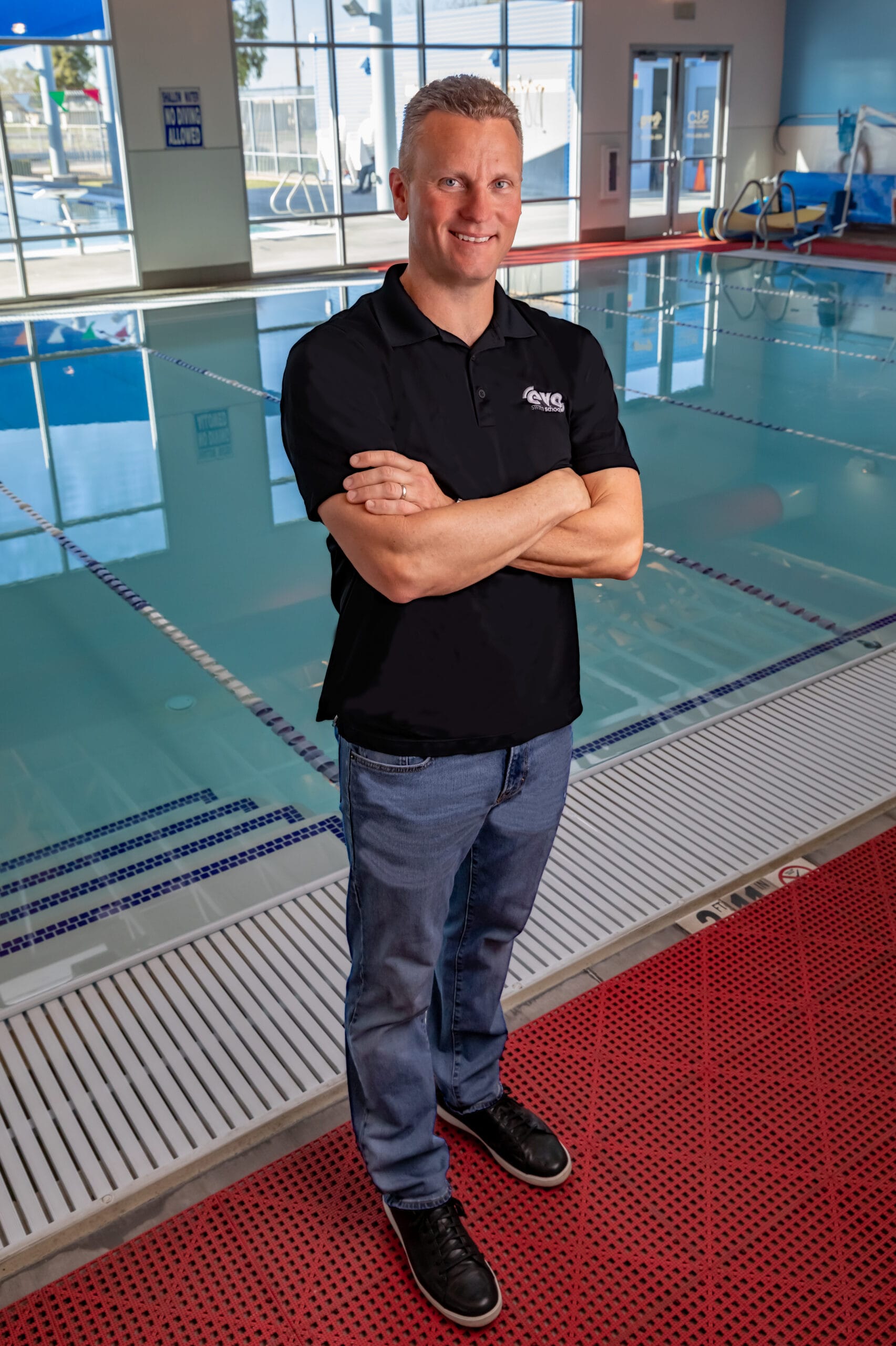
Because young bodies cool quickly, a warm and consistent water temperature keeps kids comfortable enough to relax, focus, and actually learn. That consistency is hard to get in an outdoor backyard pool, which overheats in the Arizona summer and turns cold overnight in spring and fall. At EVO Swim School, lessons take place in heated, indoor teaching pools at both the SanTan Gilbert and Mesa locations, where the water stays at a steady, comfortable temperature whether it is a 110-degree July day or a cool January morning. That stability matters most for the youngest swimmers, from parent-tot classes through entry-level lessons. Parents can browse class times to find a warm, year-round option.
The right number shifts with age. Younger children need warmer water, and the very youngest need the warmest of all.
Both extremes cause problems, and the comfortable window for kids is narrower than it is for adults.
For families with a home pool, heating a swimming pool to a kid-friendly temperature and holding it there comes down to the right equipment and a few simple habits.
The ideal pool water temperature for a child is warm enough to keep them comfortable and focused, generally the low-to-mid 80s for most kids and warmer for babies and toddlers. Whatever the number on the gauge, let your child's comfort be the final guide. A warm, steady pool turns swim time from a shivery chore into something a child looks forward to.
Ready for lessons in a warm, year-round pool? Join us today and browse available class times, or call EVO Swim School at 480-404-6191.
Most children are comfortable in water in the low-to-mid 80s Fahrenheit. Babies and toddlers need it warmer, with the American Academy of Pediatrics recommending roughly 87 to 94 degrees for children age 3 and under. Warmer water and shorter sessions suit the youngest swimmers best.
The average swimming pool temperature for general family and adult recreation is about 78 to 82 degrees Fahrenheit, which balances comfort with energy efficiency. Pools used mainly by young children are usually kept a few degrees warmer.
For older, active children, 80 degrees is usually comfortable. Younger children and toddlers often find it slightly cool and do better a few degrees warmer. Watch for shivering or bluish lips, and warm your child up if those appear, whatever the reading.
Look at your child, not just the thermometer. Shivering, goosebumps, pale or bluish skin, chattering teeth, or wanting to get out are all signs the water is too cold. Get them out and wrapped in a warm towel right away.
Yes. Warmer water speeds up algae and bacteria growth and raises sanitizer demand. Heated and warm family pools need more frequent testing, brushing, and cleaning to stay clear and safe.
Or register via phone 480-404-6191