Joining a competitive swim team in Gilbert, AZ is a big step up from weekly lessons. Readiness depends less on age and more on skills, stamina, and genuine interest in the sport. Here is how to tell whether your child is ready, and how to make the move with confidence.
Many children are ready to consider a team once they swim all four strokes comfortably and can keep going for full pool lengths. At EVO, that point usually arrives near the end of the learn-to-swim pathway.
Children build their foundation through swim lessons in Gilbert, AZ, and Mesa, moving through intermediate levels like Porpoise and Dolphin as they develop "form" swimming. The final step is the Advanced Stroke class, which EVO describes as "the direct feeder into the Rio Swim Team." Swimmers are typically ages 6 to 12 and work on all four competitive strokes, flip turns, and endurance in 60-minute sessions.
From there, families can move into the Rio Swim Team, which EVO operates. As EVO's curriculum puts it: "Finally, we perfect all four strokes and, if desired, introduce swimming as a sport." The words "if desired" matter. Competitive swimming for kids is an option, never a requirement.
Both paths build strong swimmers, but the goals and time commitment differ. Here is how they compare.
| Factor | Recreational Swim Lessons | Competitive Swim Team |
|---|---|---|
| Main goal | Water safety, comfort, and stroke development | Technique, endurance, and racing |
| Session length | 30 minutes (60 for Advanced Stroke) | 1 to 1.5 hours, depending on group |
| Frequency | Once or twice per week | Once to four times per week, depending on group |
| Format | Small-group instruction | Lane training with structured sets |
| Competition | Not required | Meets, often encouraged |
| Gear | Swimsuit, plus a swim diaper for children under 3 | Goggles, fins, kickboard, plus team cap and suit for meets |
Skill is only part of the picture. The signs your child is ready for competitive swimming usually show up in the water and in their attitude toward it.
Rio's development groups are organized by skill, so knowing the benchmarks helps parents gauge where their child stands.
Basics of all four strokes. Rio's entry group welcomes swimmers who have graduated from the stroke lesson program or can perform the basics of all four strokes.
Legal strokes. The next group asks for all four strokes performed to legal USA Swimming standards.
Flip turns and streamlining. A flip turn with a streamlined push-off is a key benchmark for development swimmers.
Starts and turns. More advanced development groups expect proficient starts and turns.
Lane etiquette. Circle swimming and sharing a lane safely are taught in Advanced Stroke before team training begins.
Two children with identical skills can respond very differently to team life. Physical and emotional readiness both matter.
Team practices run longer and cover more distance than lessons. Swimmers need the endurance to stay with a set without long breaks, along with the coordination to keep strokes clean as they tire. Rio trains in EVO's outdoor 8-lane, 25-yard pools in Gilbert and Mesa, along with Chandler-area high school pools, and the SanTan Gilbert pool is covered by large shade sails. Arizona heat makes hydration essential, so pack a full water bottle for every practice.
Competitive swimming asks children to accept coaching, handle a slower day without frustration, and stay focused through repetitive sets. A swimmer who loves the water but dislikes pressure may be happiest staying in lessons a little longer, and that is completely fine.
Team life brings new routines for the whole family.
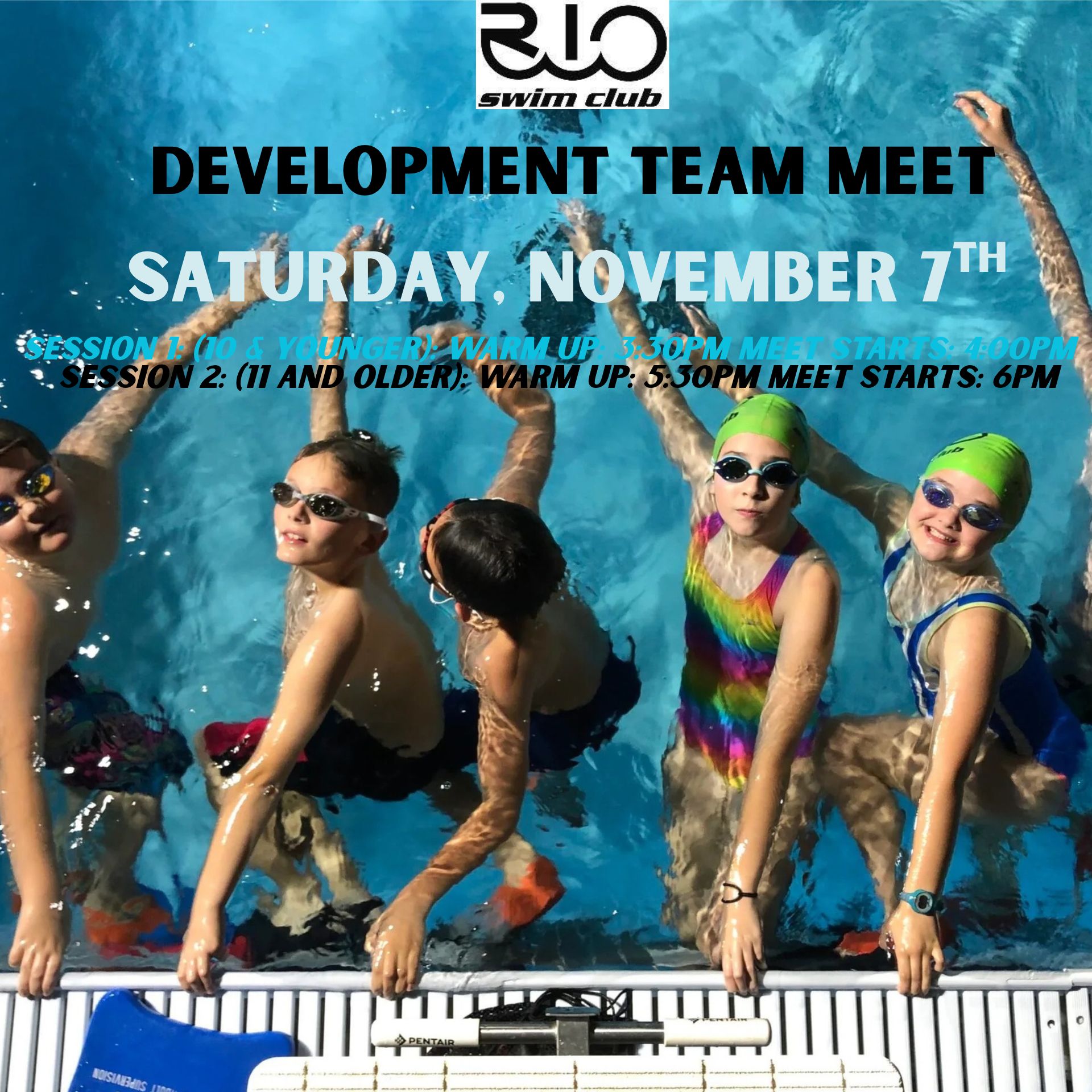
Rio's development groups practice for one to 1.5 hours, one to four times per week depending on the group. Swimmers train in lanes with structured sets and use equipment like fins and kickboards. Competitive Junior 1, for ages 8 to 14, recruits swimmers directly from the development program.
For Rio's development groups, meet attendance is strongly encouraged but not mandatory. Meets give children a chance to race, track their times, and see their progress against their own best efforts.
Practice frequency, travel to meets, and equipment all add up. Talk as a family about how many days per week feel realistic before choosing a group.
A thoughtful transition keeps swimming fun.
Parents searching for a kids swim team near me should look beyond the closest pool. Ask how swimmers are evaluated and placed, how often each group practices, whether meets are required, and how coaches communicate progress. Families comparing swim teams in Mesa, AZ, and Gilbert benefit from a program where lessons and team training share the same pathway, so the move from Advanced Stroke to a youth swim team in Mesa or Gilbert feels like the next step rather than a fresh start.
Not sure where your child stands? Rio's free evaluation places swimmers in the right group, and EVO's team can recommend the right class if your child needs a little more time in lessons. Join us today and browse available class times, or call 480-404-6191 to schedule a free team evaluation.
Rio does not list a minimum age for its development groups, and skill matters more than birthdays. At EVO, Advanced Stroke serves swimmers typically ages 6 to 12 and feeds directly into the Rio Swim Team, while Rio's Competitive Junior groups are for ages 8 to 14. A free evaluation determines the right placement.
For most team groups, yes. Rio's entry-level development group asks for the basics of all four strokes, while higher groups require strokes performed to legal USA Swimming standards. Polished technique comes later through training.
At Rio, it depends on the group. Development groups attend one to four times per week, Competitive Junior 1 practices twice per week, and Competitive Junior 2 practices up to four times per week.
Yes. Rio's groups are built around skills children develop in lessons. Moving through EVO's intermediate levels and Advanced Stroke gives children the strokes, turns, and stamina team practice requires.
Not for beginners who are still building water safety skills. Children new to the water should start with lessons. Once they can swim all four strokes and complete full pool lengths, Rio's development groups are designed for swimmers who are new to the sport of competitive swimming.
Or register via phone 480-404-6191