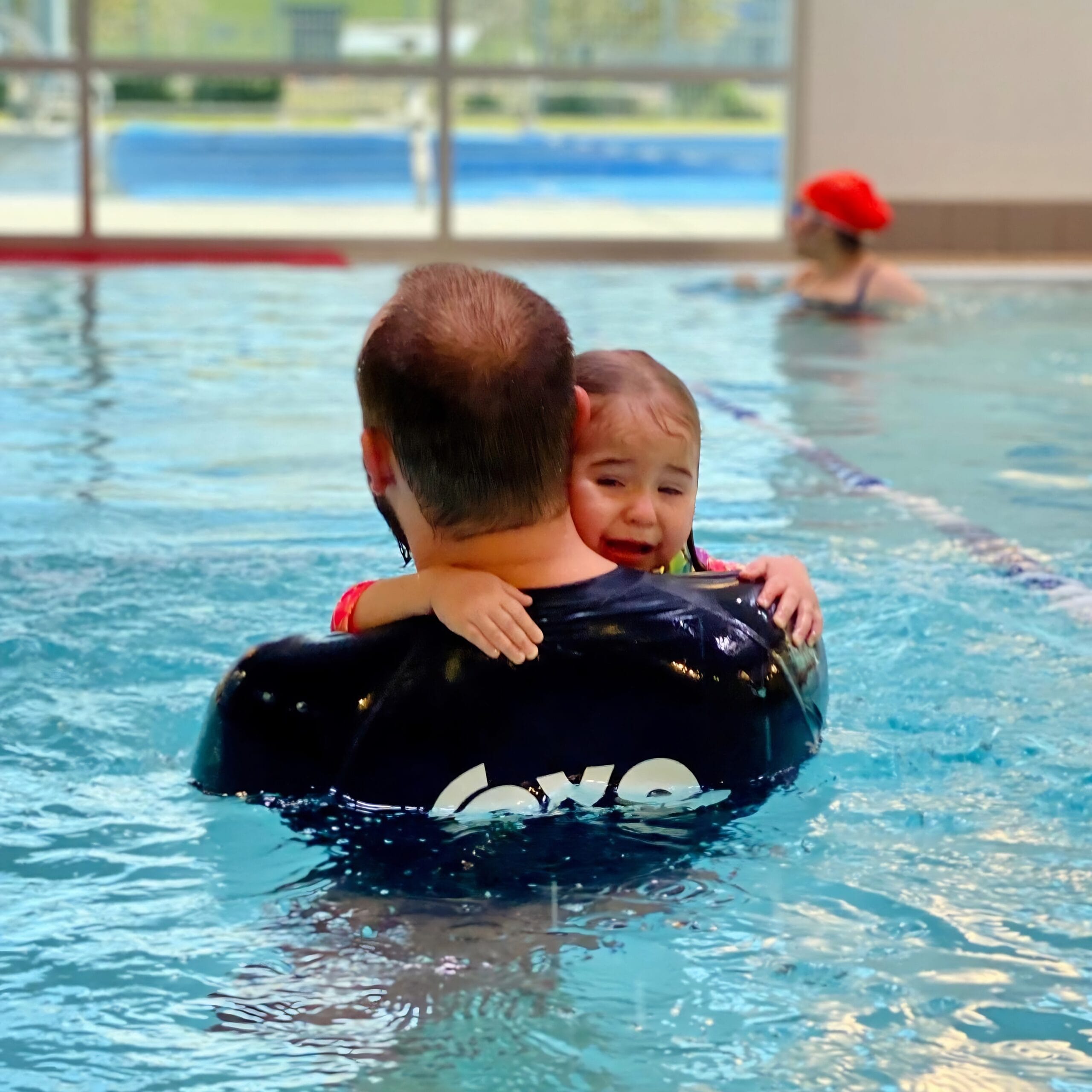
Many children feel nervous the first time they face a pool, and that hesitation is completely normal. Water is a brand-new environment with unfamiliar sights, sounds, and sensations, and a cautious response is a sign your child is paying attention, not a sign that something is wrong.
Helping your child overcome fear of the water takes patience far more than pressure. Small, consistent steps at home and calm support during lessons do more than any single big push. Below are five ways to ease the nerves and help a hesitant swimmer feel safe.
A calm, structured program removes much of the guesswork for parents. When instructors are trained to read hesitation and adjust in the moment, a fearful child gets to move forward at a pace that feels safe rather than rushed.
At EVO Swim School, beginners start in entry-level classes built around comfort first:
Babies and toddlers who are not ready to swim on their own begin in parent-tot classes, where a caregiver stays in the water for the entire session. As confidence grows, swimmers move from those first comfort skills into Seal-level instruction and beyond. Both the SanTan Gilbert and Mesa locations use indoor, climate-controlled pools year-round, so lessons stay consistent through Arizona's heat and monsoon season. Parents can browse open class times and match a schedule to their week.
Fear rarely disappears after one lesson. What works is a steady mix of preparation, calm energy, and small wins repeated over time. The five approaches below give hesitant swimmers a gentle on-ramp and help parents support progress without piling on pressure.
Before you can ease a worry, figure out what is actually driving it. For some kids, the trigger is newness:
Unfamiliar smells
Echoing sounds
The feeling of water running down the face
For others, separation is the real issue, and the water is simply where it surfaces. A child who keeps turning to look for you may settle faster once you step out of sight and let the instructor take the lead. Naming the specific fear turns a vague meltdown into something you can genuinely work on.
Children read their parents closely and borrow whatever emotion they see. When you stay relaxed and positive, your child leans on that calm. A worried face or a tense voice sends the opposite message, even when your words are reassuring:
Cheer the small stuff out loud
Your composure is one of the most useful safety tips for kids afraid of water, because it shapes how your child reads the entire experience.
Familiar water lowers the stakes. Between lessons, let your child play in the bathtub, a shallow kiddie pool, or at a splash pad, always with close supervision.
Progress for a nervous swimmer is measured in inches, not laps.
Consistency is where water confidence becomes permanent.
Pick a recurring slot and protect it like any other weekly commitment.
Good intentions sometimes backfire. A handful of common habits can deepen a child's fear of swimming instead of easing it, and each one is easy to avoid once you know to watch for it.
Every hesitant swimmer moves at their own speed, and the goal is steady comfort, not instant bravery. With calm support at home and patient instructors in the pool, afraid-of-water swim lessons can turn quiet dread into genuine excitement over a season or two. Progress compounds, and the nervous beginner from September often looks like a different swimmer by spring.
Ready to help your child build water confidence at a pace that feels safe? Join us today and browse available class times, or call EVO Swim School at 480-404-6191.
Children can begin as early as 3 months in parent-tot classes, with a caregiver in the water the whole time. For an anxious older child, there is no wrong age to start. What matters more than the number is a gentle, comfort-first approach and an instructor who adjusts to your child's pace.
Every child is different. Some settle within a few lessons, while others need several weeks of consistent, low-pressure exposure. Frequency helps, since short, regular sessions reduce anxiety faster than occasional long ones. Progress is rarely a straight line, and small setbacks along the way are normal.
For babies and toddlers, yes, parent-tot classes are built for a caregiver to be in the water. For older children, staying poolside and letting the instructor lead often works better. A child who constantly checks for a parent may focus and calm down more quickly once that parent steps out of view.
An occasional rough day is fine to honor, but skipping regularly tends to make fear worse by resetting progress. A stronger approach is showing up consistently while staying flexible in the moment. Instructors are trained to work through tears patiently without forcing anything.
Not for building real skills. Arm floats and puddle jumpers can ease short-term nerves, but they hold children in an upright position that works against proper swimming and offer a false sense of safety. Supervised comfort-building and structured lessons serve a fearful child far better over time.
Or register via phone 480-404-6191