Few questions come up more often from new parents than this one: what age should a child start swim lessons? For families in Gilbert and Mesa, where backyard pools are part of daily life, the instinct to start early is a good one.
The short answer is that earlier is generally better, with one important caveat. The best age for swim lessons depends on what you mean by lessons, since water comfort for a baby and formal swim instruction for a toddler are two very different things. Here is how to think about timing, and why an early start tends to pay off.
The honest answer combines two things: what national pediatric guidance says, and what a specific child is developmentally ready for. Both point toward starting sooner rather than later.
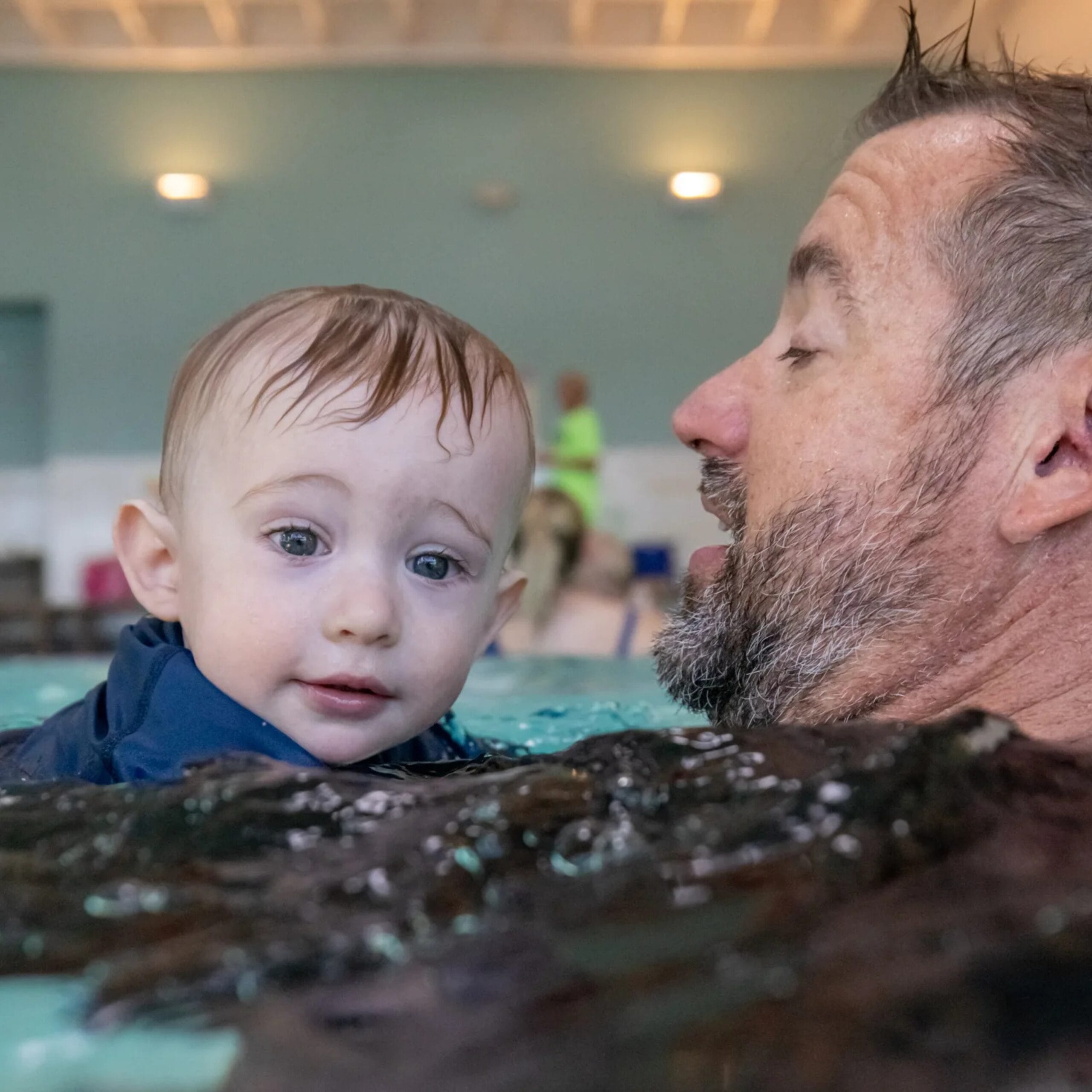
For babies, the earliest step is not swimming; it is getting comfortable in the water with a parent close by. At EVO Swim School, parent-tot classes welcome babies from 3 months, with a caregiver in the water for the entire session. Early classes here focus on water acclimation, gentle bonding, and simple routines like supported floating, not stroke work. Starting at this stage helps a baby build a positive relationship with water long before formal lessons begin.
The American Academy of Pediatrics recommends swim lessons as a layer of drowning protection that can begin for many children around age 1. Toddlers become mobile quickly, which raises the odds of reaching water unsupervised, so ages 1 to 4 are a key window for building water competency. The AAP is also clear that lessons are one layer of protection, not a guarantee, and that children develop at different rates. For infants under 1, the guidance favors parent-child water play for comfort rather than formal instruction.
Around age 2, many children are ready to move into entry-level instruction without a parent in the water, working on floating, kicking, breath control, and safe pool exits. At EVO, both the SanTan Gilbert and Mesa locations run year-round, so a child can start whenever they are ready instead of waiting for summer. Parents can browse open class times and see the full path from first classes through advanced levels.
Beyond safety, an early start compounds in ways that show up for years. The reasons below explain why the youngest swimmers often grow into the most confident ones.
As much as an early start helps, readiness is individual, and there is no single perfect age to learn swimming. The AAP notes that children develop at different rates, so emotional maturity, physical ability, and comfort in the water all matter more than a birthday. If you are unsure whether your child is ready, your pediatrician can help you decide. EVO's coaches also place each child by comfort and readiness, not age alone, and there is no penalty for starting a little later. The goal is a positive, safe introduction to the water whenever it happens.
The best age to start swim lessons is often earlier than parents expect, whether that means parent-tot water time at a few months old or independent lessons at age 2. An early, patient start builds comfort, safety skills, and confidence that last for years. Whenever your child is ready, a warm, year-round program makes it easy to begin.
Ready to give your child a strong start in the water? Join us today and browse available class times, or call EVO Swim School at 480-404-6191.
Most children are ready for formal swim lessons around age 1, according to the American Academy of Pediatrics, though readiness varies from child to child. Babies can start parent-tot water classes as early as 3 months for comfort and bonding, while independent lessons typically begin around age 2.
Many children master basic independent swimming between ages 4 and 6, though it depends on when they started and how consistently they practice. Kids who begin earlier and swim year-round often reach that point sooner.
Parent-child water play and acclimation classes are safe and enjoyable for infants, with a caregiver in the water the whole time. The AAP does not recommend formal, independent swim instruction for babies under 1, since there is no evidence it lowers drowning risk at that age. Early classes focus on comfort, not survival skills.
No. Swim lessons are one important layer of drowning protection, not a guarantee. Constant, close supervision, pool fencing, and life jackets around open water all remain essential, even for a child who swims well.
A snug-fitting swimsuit and a towel. Any child under 3 must wear an approved reusable swim diaper, regardless of potty-training status, which keeps the pool clean for everyone. Arriving a few minutes early helps your little one settle in before class.
Or register via phone 480-404-6191