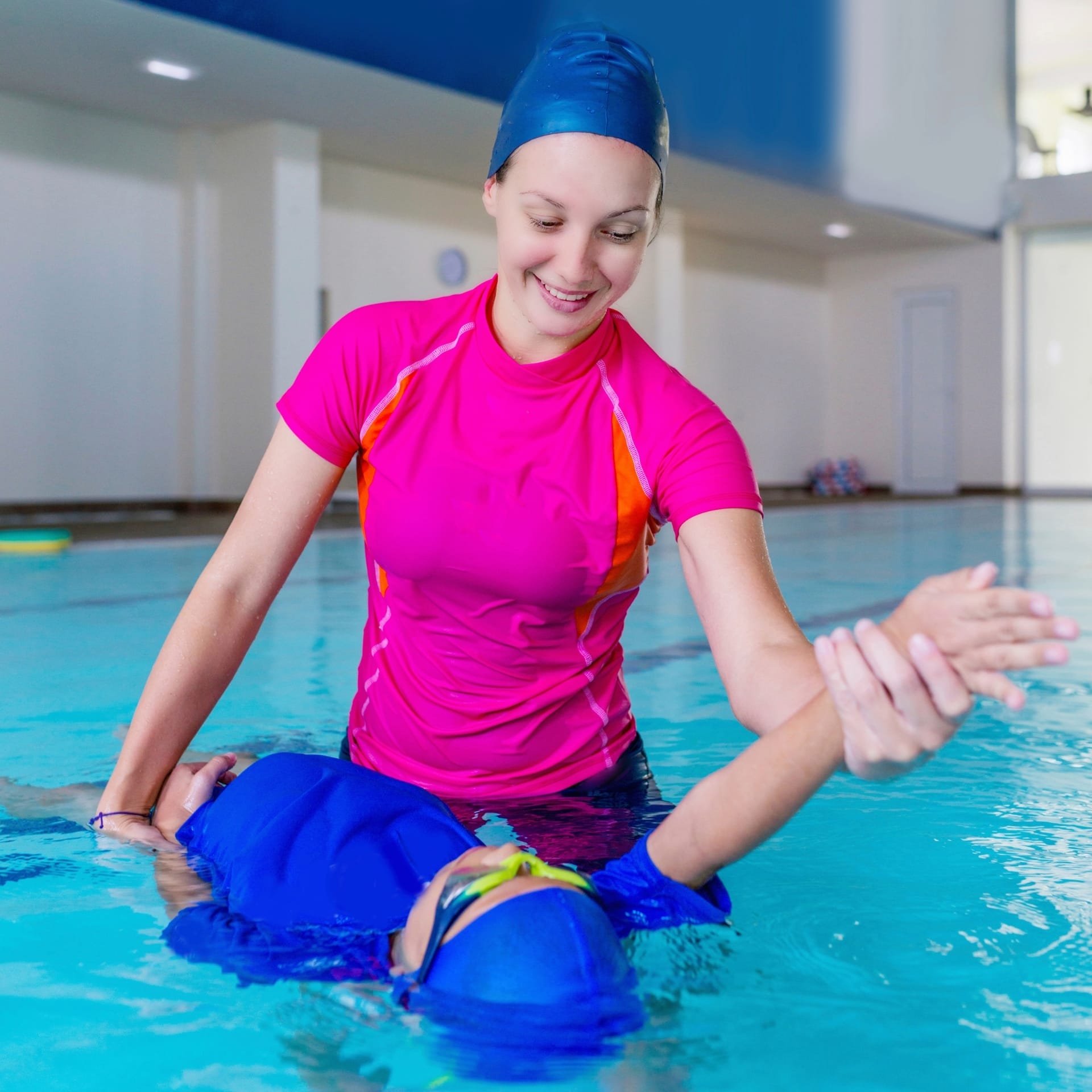
Your child screams the moment their toes touch the pool. You carry them to the edge, and they climb your body like a cat avoiding a bath. If this scene feels familiar, you are not dealing with a stubborn child. You are dealing with a fear response, and it is one of the most common reasons parents near SanTan Gilbert hesitate to continue (or start) kids' swim lessons.
Water fear does not mean your child cannot learn to swim. But it does mean the approach matters, especially when signing up for water swimming lessons for the first time. Here is how qualified swim schools handle fear, what actually works, and what parents can do to support the process from the viewing room.
Water fear is not one thing. Different children are afraid for different reasons, and understanding the source helps coaches and parents choose the right response.
A coach who recognizes which type of fear a child is experiencing can adjust accordingly. A sensory-overwhelmed child needs a quieter entry. A child with separation anxiety needs reassurance that Mom is watching. A child with a past bad experience needs slow, trust-building repetition.
EVO's approach to afraid of water swim lessons does not involve forcing a screaming child underwater. The process is gradual, structured, and individually paced.
The Otter class at EVO has a 3:1 student-to-coach ratio. When one of those three children is working through water fear, the coach can dedicate real time to that child without abandoning the other two. A large group class with eight or ten children does not allow that flexibility.
A typical progression for a fearful child in swimming lessons for toddlers at EVO might look like:
Some children compress that timeline. Others take longer. At EVO, progression is based on the child's readiness, not a class schedule or parent preference.
Fear decreases with repeated, safe exposure. A child who attends once, skips two weeks, and comes back often restarts the emotional adjustment from scratch. Consistent weekly children swim lessons give the brain time to reclassify the pool as a safe environment rather than a threat.
For toddlers aged two and three, separation anxiety swimming lessons can be harder than water fear itself. A child who loves bath time but panics when Mom walks away from the pool is not scared of water. The fear is about the separation.
Families searching for swim lessons san tan valley az and swim lessons gilbert az often ask how long the fear phase lasts. Every child is different, but most fearful children at EVO show meaningful improvement within four to six weeks of consistent attendance.
Parents looking at swimming lessons san tan valley az should know the fear phase follows a fairly predictable pattern.
If a child is still showing the same level of distress after eight consistent weeks, a conversation with the coach about adjusting the class level, ratio, or schedule can help identify the next step.
Ready to help your child work through water fear? Join us today and find a small-group class near SanTan Gilbert.
Call EVO Swim School at 480-404-6191 with questions.
Yes. Crying during the first several sessions is common, especially for toddlers between ages two and four. Coaches at EVO work through tears using patience, distraction, and gradual exposure rather than force.
Stopping and restarting later usually resets the adjustment process. Consistent weekly attendance, even through difficult sessions, produces faster and more lasting results than starting and stopping.
Coaches start wherever the child is comfortable, even if that means the pool deck or steps. The focus is on building trust first. No child is forced into the water before they are ready.
EVO's small class sizes (3:1 in Otter, 4:1 in Seal) mean a coach can manage a fearful child's needs without taking away from the other students' instruction time.
EVO does not separate fearful children into a different class. Entry-level classes (Otter and Seal) accommodate a range of comfort levels, and low ratios allow individualized pacing within the group.
Yes. The Pufferfish parent-tot class (ages 16 to 24 months) lets a child build water comfort with a parent present before transitioning to the Otter class at age two. Starting with parent-tot instruction often reduces fear during the later independent stage.
Or register via phone 480-404-6191